
Stopping the Sahara Desert in its tracks
The Great Green Wall: Africa’s Living Line of Defence Against the Desert
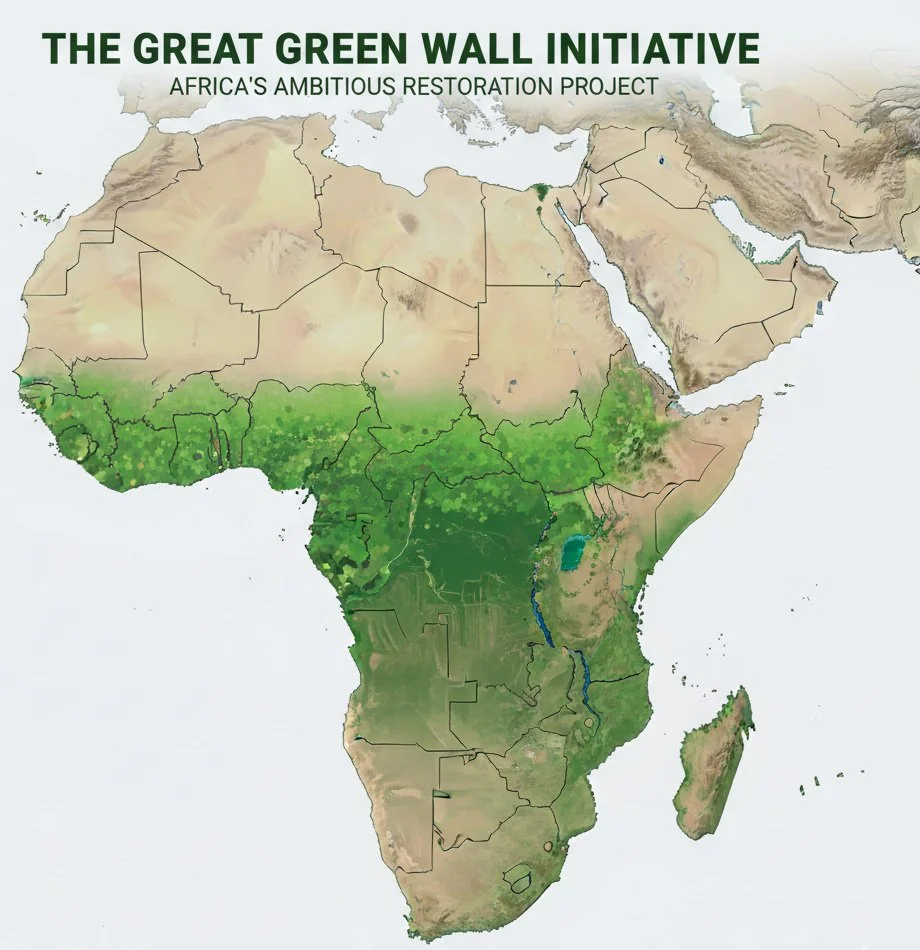
Across the southern edge of the Sahara Desert, the African Union has undertaken a significant task of continental proportions. Stretching from Senegal on the Atlantic coast to Djibouti on the Red Sea, the Great Green Wall is one of the more ambitious environmental projects in history. It is a vision of hope: a vast belt of restored land designed to halt desertification (the process by which fertile land becomes desert), typically as a result of drought, deforestation, or inappropriate agriculture. The project aims to revive ecosystems and bring life back to parts of Africa that have deteriorated into deserts.
A Continental Effort
The Great Green Wall was launched by the African Union in 2007 as a bold initiative to plant a living barrier of trees spanning more than 8,000 kilometres. Over time, it has evolved into a comprehensive program that focuses on restoring degraded landscapes and improving livelihoods across 11 countries: Burkina Faso, Chad, Djibouti, Eritrea, Ethiopia, Mali, Mauritania, Niger, Nigeria, Senegal, and Sudan.
So far, almost 18 million hectares of land have been restored. By 2030, the initiative aims to regenerate 100 million hectares, store 250 million tonnes of carbon, and create 10 million jobs. Its goal is not just to stop the Sahara from expanding, but to build resilience and prosperity in communities that depend on the land.
The Challenge of Land Degradation
The Sahel faces some of the world’s most severe land degradation. Overgrazing, poor land management, and climate change have stripped the soil of nutrients and moisture, leaving vast areas barren. As rainfall becomes more unpredictable, fertile soil turns to dust and crops fail.
More than 9,000 species of plants and animals in northern Africa are now endangered due to habitat loss. Human lives are also being uprooted. In 2020 alone, more than 2.5 million people in the Sahel were displaced as a result of drought and desertification.
Ancient Techniques, Modern Solutions
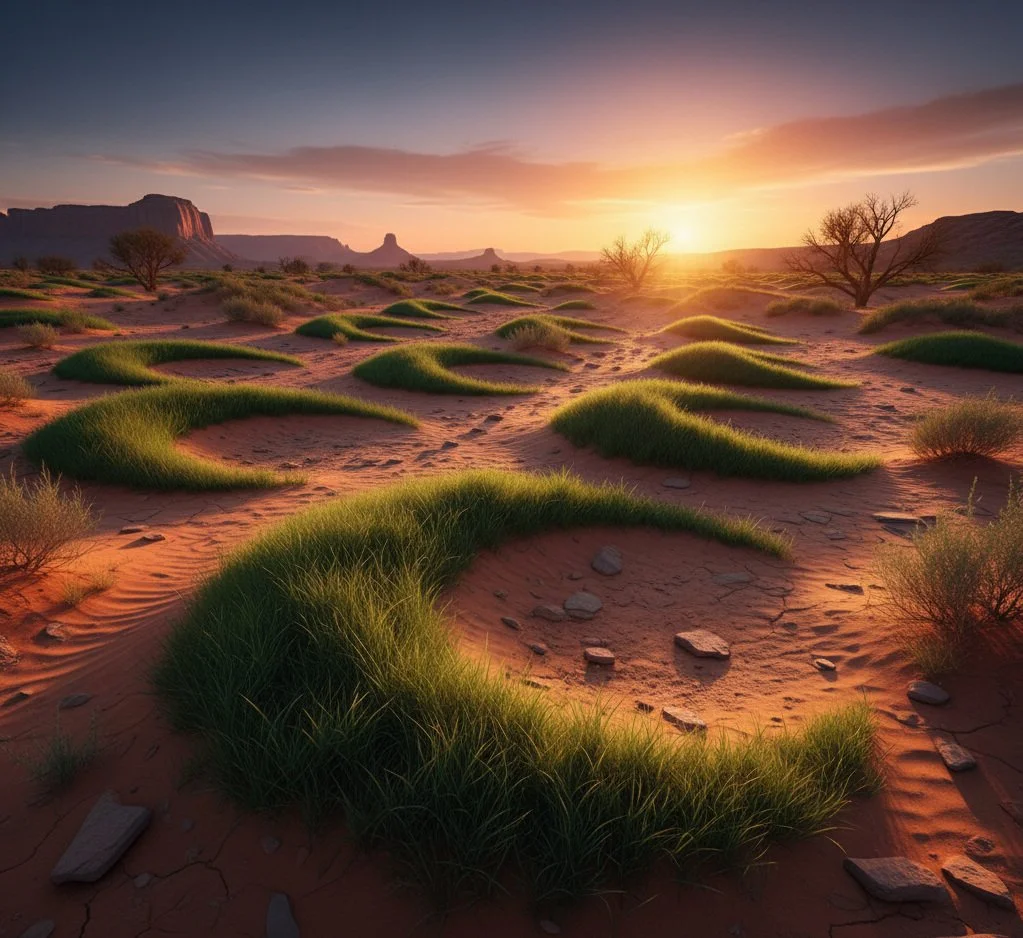
Local farmers are proving that restoring land does not always require high technology. In Kollo, Niger, they are reviving traditional methods to help the land heal itself. One of the most effective techniques is the creation of half-moons, shallow, crescent-shaped ditches dug along the natural slope of the land.
In these dry regions, the soil often becomes hard and water-repellent. When rain does fall, it quickly runs off instead of soaking into the ground. The half-moons capture this precious rainwater, allowing it to pool and slowly absorb into the soil. Over time, this helps rehydrate the earth, encouraging seeds to germinate and vegetation to return.
Farmers also use zai pits, small holes that trap organic matter and water around crops, and assisted natural regeneration, where trees and shrubs are protected from grazing and woodcutting so that they can regrow naturally. Together, these practices have helped turn arid fields into productive farmland once again.
Half-Moon Pits
How the Great Green Wall Supports Crop Farming
The Great Green Wall has brought a wide range of benefits to farming communities across the Sahel, helping them adapt to the changing climate and rebuild their livelihoods. Tree planting and sustainable soil management techniques, including terracing (the practice of cutting a slope into a series of flat, level platforms or "steps" to create more usable farmland on hillsides and mountains) and agroforestry (a land-use system that intentionally combines trees and shrubs with crops and/or livestock on the same land.), have improved soil quality by increasing fertility and preventing erosion. Healthier soils are now better able to support crops, while the presence of trees and vegetation helps stabilise the land and reduce the risk of further degradation.
As vegetation cover expands, the land holds more water, allowing rain to soak into the ground instead of evaporating or washing away. This improved water retention has made crop production more reliable, even when rainfall is unpredictable, and the rising water table now supports crops throughout the year. Trees and shrubs also serve as natural windbreaks, reducing wind erosion and protecting topsoil from being stripped away.
These environmental improvements have translated directly into better harvests. In many regions, farmers have reported that their crop yields have doubled since restoration efforts began. The initiative also promotes climate-smart agriculture by encouraging techniques such as farmer-managed natural regeneration, which allows native vegetation to regrow naturally and strengthens the resilience of farming systems.
Restored land has made it possible to grow a wider variety of nutritious foods, including fruits and vegetables, which has improved both diet and income. Trees like baobab and moringa add further value by providing oils, powders, and other products that can be sold in local and international markets. Together, these efforts have created a more diverse and productive landscape that supports crops, livestock, and wild plants, helping to secure food and livelihoods for millions of people.
Obstacles and Criticisms
Despite its progress, the Great Green Wall has faced many challenges. A United Nations report in 2020 found that less than 20 per cent of the project’s goals had been met, with only 350,000 jobs created so far. Conflicts, political instability, and inconsistent funding have slowed implementation.
In response, African leaders launched the Great Green Wall Accelerator in 2021 to improve coordination and secure the necessary financing to meet the 2030 targets.
However, some experts have raised concerns about the project’s deeper narrative. The concept of “desertification” has roots in colonial history, when European administrators blamed local people for environmental degradation while imposing cash crops that damaged the land. Critics warn that Western-led funding and narratives risk repeating these patterns unless the initiative remains firmly African-led and community-driven.
Seeds of Hope
Despite the hurdles, the Great Green Wall remains a powerful symbol of resilience and renewal. It shows that through traditional knowledge, innovation, and cooperation, even the most degraded land can come back to life.
If the initiative reaches its full potential, it could become one of the greatest ecological restoration efforts in human history. But even today, in the fields of Niger and Mali, where green shoots once again push through cracked earth, the transformation has already begun.
